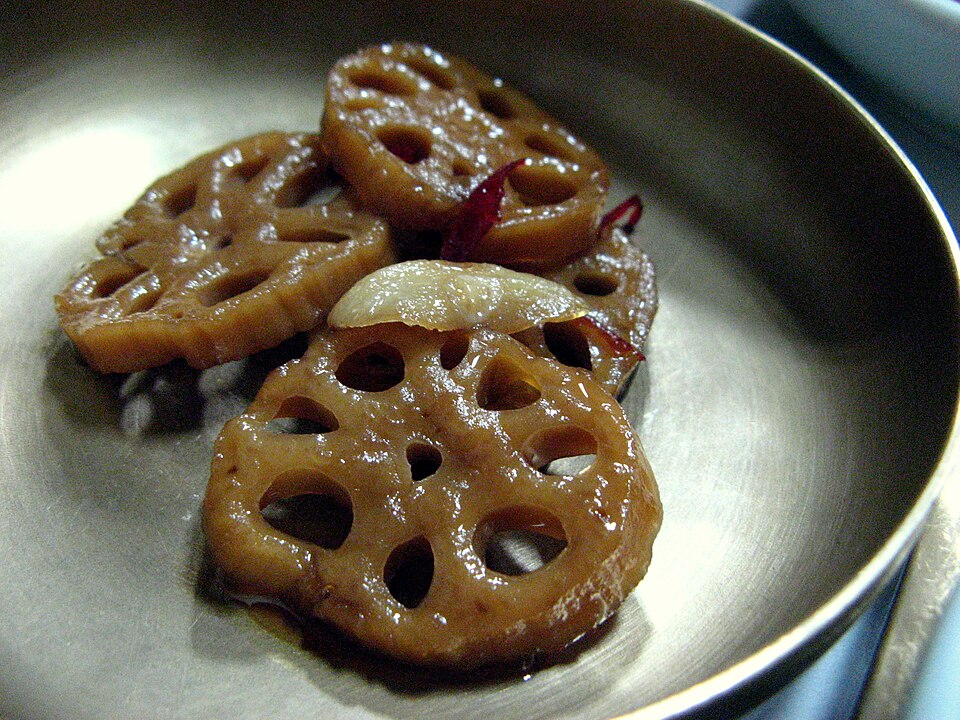
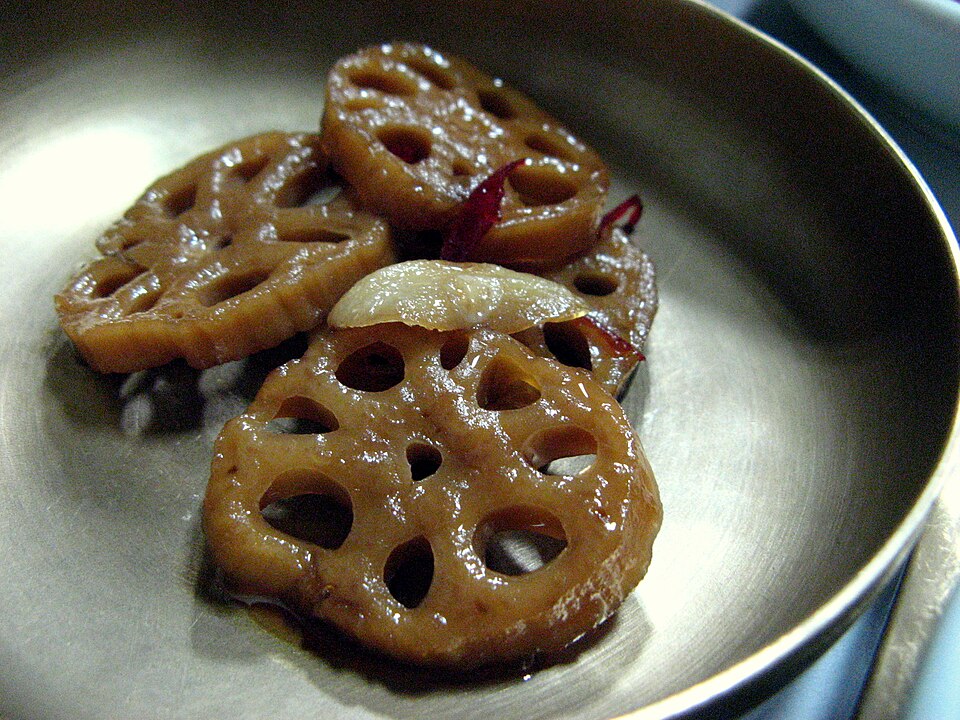
In the vibrant tapestry of Korean cuisine, where every side dish tells a story, Yeongeun Jorim stands out with its unique charm and elegant simplicity. This braised lotus root dish, a beloved *banchan* (small side dish), captures the essence of Korean home cooking: humble ingredients transformed into something wonderfully savory, sweet, and satisfying.
Lotus root, with its distinctive pattern of hollow channels, has been appreciated across Asia for centuries, not just for its beauty but also for its versatile texture and subtle flavor. In Korea, it’s often prepared as a *jorim*, a braising technique that involves simmering ingredients in a soy sauce-based glaze until they are tender yet retain a pleasant bite. Yeongeun Jorim is a staple in many Korean households, often appearing on dinner tables from everyday meals to festive holidays, embodying comfort and tradition. Its ability to be served both warm and chilled makes it a versatile companion to any meal, providing a delightful contrast to richer dishes.
What truly makes Yeongeun Jorim special is its exquisite balance of textures and flavors. Each translucent slice of lotus root offers a delightful crisp-chewy bite, a testament to careful braising that softens without turning mushy. This unique texture is beautifully coated in a glossy, sticky glaze that is profoundly savory from soy sauce, subtly sweet from sugar or corn syrup, and often carries a nutty depth from sesame oil and seeds. Some variations might include a hint of garlic or ginger, adding an aromatic complexity that elevates the dish further. It’s an umami-rich experience that leaves a lingering, comforting taste, making it incredibly addictive.
Beyond its delectable taste, Yeongeun Jorim also offers a wealth of health benefits, primarily from the lotus root itself. Lotus root is an excellent source of dietary fiber, which is crucial for digestive health and helps maintain satiety. It’s also rich in essential vitamins, particularly Vitamin C, which supports the immune system, and several B vitamins vital for energy metabolism. Furthermore, it provides important minerals such as potassium, iron, and zinc. When prepared with minimal oil and a balanced soy-sugar glaze, this vegetable-centric dish becomes a wholesome addition to your diet, contributing essential nutrients without heavy fats.
Ready to bring the taste of Korea to your kitchen? Here’s a clear recipe for delicious Yeongeeun Jorim:
**Homemade Yeongeun Jorim (Braised Lotus Root)**
**Ingredients:**
* 1 large (approx. 400-500g) fresh lotus root
* 3 cups water (for braising)
* 1/2 cup soy sauce
* 1/4 cup sugar (or Korean corn syrup/rice syrup)
* 1 tablespoon mirin (optional, for flavor and gloss)
* 1 teaspoon sesame oil
* 1 teaspoon toasted sesame seeds (for garnish)
**Instructions:**
1. **Prepare the Lotus Root:** Peel the lotus root thoroughly. Slice it into thin, uniform rounds, about 1/4 inch (0.5 cm) thick.
2. **Blanch the Lotus Root:** In a medium pot, bring about 6 cups of water to a rolling boil. Add the sliced lotus root and boil for 5-7 minutes. This step helps to remove any bitterness and soften the root slightly, ensuring a tender texture. Drain the lotus root and rinse with cold water to stop the cooking process.
3. **Combine Braising Liquid:** In a clean, wide pot or deep skillet, combine the 3 cups of fresh water, soy sauce, sugar (or syrup), and mirin (if using). Bring the mixture to a gentle simmer over medium heat, stirring until the sugar dissolves.
4. **Braise the Lotus Root:** Add the blanched lotus root slices to the simmering braising liquid. Ensure the lotus root is mostly submerged.
5. **Simmer and Reduce:** Reduce the heat to low, cover the pot, and let it simmer for 30-40 minutes, or until the lotus root is tender-crisp and has absorbed much of the liquid. Stir occasionally to prevent sticking and ensure even cooking.
6. **Glaze the Lotus Root:** Uncover the pot, increase the heat to medium-low, and continue cooking, stirring more frequently. Allow the liquid to reduce further and thicken into a glossy, sticky glaze that coats the lotus root. This should take another 5-10 minutes. Be careful not to burn the glaze.
7. **Finish and Serve:** Remove the pot from the heat. Drizzle with sesame oil and toss gently to coat. Transfer the Yeongeun Jorim to a serving dish, sprinkle with toasted sesame seeds, and serve as a delightful side dish, either warm or at room temperature.
Feature: K-Food Spotlight – Yeongeun Jorim (Braised Lotus Root)