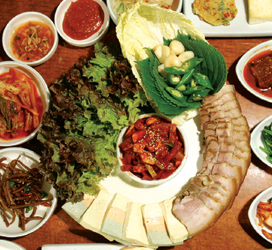
In the vibrant tapestry of Korean cuisine, there are dishes that transcend mere sustenance, becoming an experience, a ritual, a communal joy. Bossam (보쌈), or Boiled Pork Wraps, is undoubtedly one such culinary gem. A beloved staple at dinner tables and restaurants across Korea, Bossam offers a delightful symphony of textures and flavors, inviting diners to craft their perfect bite, every single time.
The history of Bossam is often intertwined with the tradition of gimjang – the annual kimchi-making season. Families would slaughter a pig to celebrate the arduous task of preparing kimchi for the winter, and the freshly boiled pork would be served with the very first batches of new, unfermented kimchi (geotjeori). This tradition highlights Bossam’s essence: a celebration of fresh ingredients and collective enjoyment. While its origins are humble, Bossam has evolved into a sophisticated dish enjoyed year-round, revered for its comforting warmth and interactive nature.
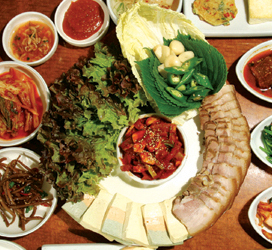
What makes Bossam so special is its incredible balance and customizable appeal. The star is tender, succulent pork, typically belly or shoulder, slow-boiled with aromatic ingredients until it reaches peak tenderness. This subtly flavored meat acts as the perfect canvas for a kaleidoscope of accompanying elements: crisp lettuce and perilla leaves, pungent raw garlic, fiery green chilies, and, crucially, the bold, spicy kick of kimchi. Often, a tangy saeujeot (fermented shrimp sauce) and a savory ssamjang (spicy dipping sauce) are also provided, each adding layers of umami and depth. The ritual of assembling your own wrap – a piece of pork, a dab of sauce, a sliver of garlic, all nestled in a fresh leaf – is immensely satisfying and fosters a shared dining experience.
Beyond its deliciousness, Bossam offers surprising health benefits rooted in traditional Korean culinary practices. The primary component, boiled pork, provides a significant source of high-quality protein and B vitamins. Boiling, as opposed to frying, helps to render out some of the fat, resulting in a leaner, healthier preparation. The generous array of fresh vegetables, such as lettuce, perilla leaves, and raw garlic, provides abundant fiber, essential vitamins, and antioxidants. The accompanying kimchi, a cornerstone of Korean cuisine, is a fermented superfood rich in probiotics, which contribute to a healthy gut microbiome and can aid digestion. Spices used in the kimchi, like garlic, ginger, and gochugaru (Korean chili flakes), are also known for their potential anti-inflammatory properties and nutritional value. All these elements combine to create a balanced meal that is both hearty and wholesome.
- Home Recipe: Bossam (Boiled Pork Wraps)**
Recreating this Korean classic at home is simpler than you might think, and incredibly rewarding.
- Ingredients:**
- 1 kg (2.2 lbs) boneless pork belly or shoulder
- 1 large onion, halved
- 6-8 cloves garlic, smashed
- 1 small piece (approx. 2-inch) ginger, sliced
- 2 spring onions (scallions), halved
- 2 tablespoons doenjang (Korean soybean paste)
- 1 teaspoon instant coffee powder (optional, for color and to remove gamey smell)
- 1 tablespoon soju or rice wine (optional)
- For serving: Fresh lettuce leaves, perilla leaves, sliced raw garlic, sliced green chili, store-bought ssamjang, saeujeot (fermented shrimp sauce), and fresh kimchi (geotjeori style) or spicy radish salad (mu-saengchae).
- Instructions:**
1. Rinse the pork thoroughly under cold water. If using pork belly, you can score the skin slightly if desired, though it’s not essential.
2. In a large pot, combine the pork, halved onion, smashed garlic, sliced ginger, spring onions, doenjang, instant coffee powder (if using), and soju (if using). Add enough water to completely cover the pork.
3. Bring the water to a rolling boil over high heat, then reduce the heat to medium-low, cover, and simmer for 60-90 minutes, or until the pork is fork-tender. Cooking time will vary depending on the thickness of your pork cut.
4. Once cooked, carefully remove the pork from the pot and let it rest on a cutting board for 10-15 minutes. This allows the juices to redistribute, ensuring a more tender and flavorful slice.
5. While the pork rests, prepare your serving platters. Arrange the fresh lettuce and perilla leaves, sliced raw garlic, green chili, ssamjang, saeujeot, and fresh kimchi or radish salad.
6. Slice the rested pork into thin (about 0.5 cm or 1/4 inch) uniform pieces against the grain.
7. Arrange the sliced pork on a serving platter alongside all the accompaniments. To eat, place a piece of pork, a dab of ssamjang or saeujeot, a slice of garlic or chili, and some kimchi onto a lettuce or perilla leaf, wrap it up, and enjoy!
Tips & Variations
- For a leaner option, use pork shoulder (moksal); for a richer, melt-in-your-mouth experience, pork belly (samgyeopsal) is traditional.
- You can add a few whole black peppercorns or bay leaves to the boiling water for extra aroma.
Storage
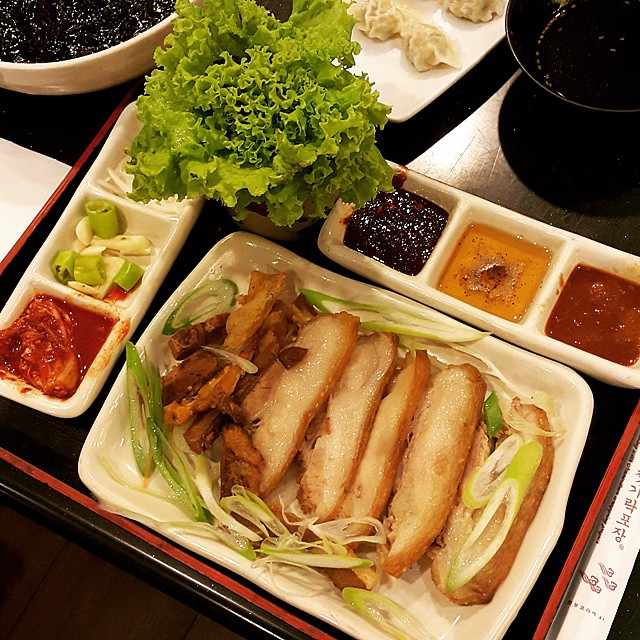
Store leftover cooked pork separately from the fresh vegetables and sauces in airtight containers in the refrigerator for up to 3 days.
FAQ
Q: Can I use pre-cut pork pieces instead of a whole slab?
A: Yes, you can use larger chunks of pork, but ensure they are still sizable enough to slice after cooking. The cooking time might be slightly shorter.
Q: What can I substitute for saeujeot if I can’t find it?
A: While saeujeot offers a unique savory depth, if unavailable, you can serve with just ssamjang, or a simple dipping sauce of soy sauce with a dash of vinegar and a pinch of sugar.
Feature: K-Food Spotlight – Bossam (Boiled Pork Wraps)