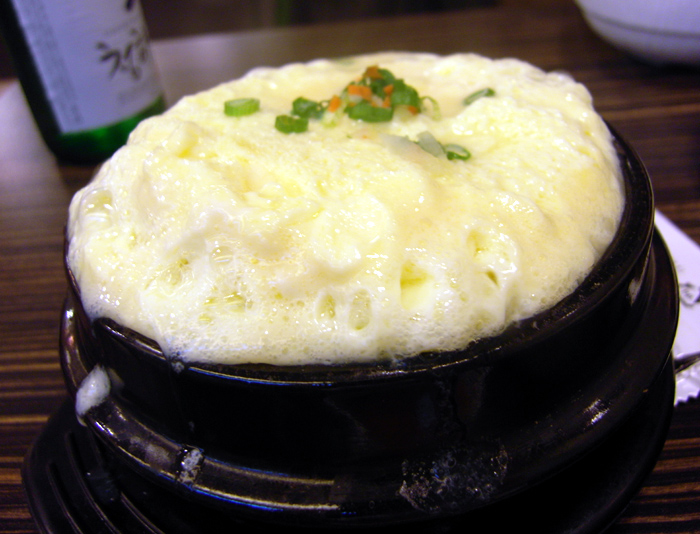
In the vibrant tapestry of Korean cuisine, where bold flavors and hearty textures often take center stage, there exists a dish that offers a gentle, reassuring embrace: Gyeran Jjim. This unassuming steamed egg custard, often overlooked by those new to Korean food, is a beloved staple found on almost every Korean dining table, from bustling restaurants to quiet home kitchens.
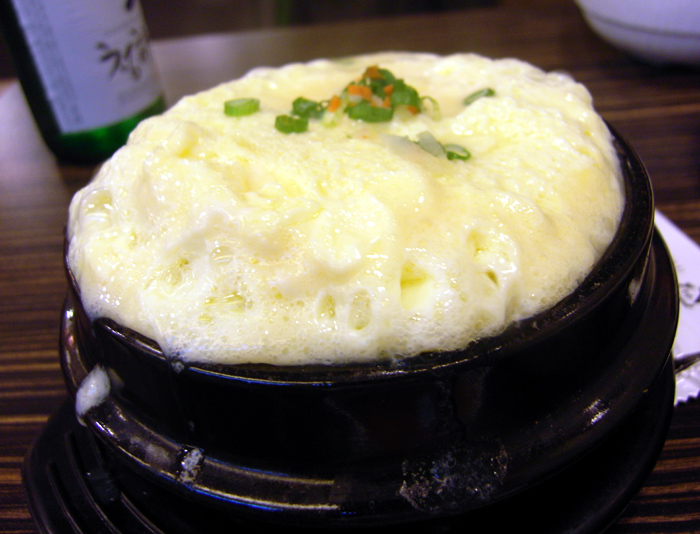
Gyeran Jjim, literally “steamed egg,” boasts a rich history rooted in practicality and simple goodness. For centuries, eggs have been a fundamental protein source in Korea, and steaming provided a gentle, efficient cooking method, especially during colder months or when a light, nourishing dish was desired. It’s the ultimate comfort food, a soft landing for any meal, frequently served as a soothing *banchan* (side dish) alongside spicier fare or as a standalone bowl of tender warmth. Its adaptability also means variations exist – some families prepare it directly in an earthenware pot (ttukbaegi) over a flame, creating a dramatic, puffy rise and a slightly crispy bottom, while others opt for a smoother, almost pudding-like texture steamed in a bowl.
What makes Gyeran Jjim truly special is its incredible simplicity married with a remarkably complex yet subtle flavor profile. At its best, it’s a culinary paradox: light as air, yet deeply satisfying. The texture is key – a perfectly cooked Gyeran Jjim is incredibly smooth, custardy, and melts in your mouth, often described as a savory cloud. The primary flavors are the natural richness of the egg, enhanced by the umami depth of a good broth (often anchovy or kelp dashi), and balanced with a delicate hint of salt and sometimes a touch of sesame oil. Scallions and other finely diced vegetables add freshness and a slight textural contrast, but the star remains the silky, savory egg.
Beyond its comforting taste, Gyeran Jjim offers genuine health benefits. Eggs are a powerhouse of nutrition, packed with high-quality protein essential for muscle repair and growth, as well as crucial vitamins like B12 and D, and minerals like selenium. They’re also an excellent source of choline, important for brain health. Because Gyeran Jjim is steamed rather than fried, it requires no added cooking oil, making it a naturally lighter option compared to many other egg dishes. When prepared with a vegetable broth, it absorbs additional minerals and nutrients, and the inclusion of fresh scallions or other finely chopped vegetables further boosts its vitamin and fiber content, contributing to a well-rounded and easily digestible meal. It’s a testament to the fact that nourishing food doesn’t have to be complicated.
Ready to bring this comforting Korean classic into your own kitchen? Here’s a simple recipe to create your own silky Gyeran Jjim:
**Ingredients:**
* 4 large eggs
* 1 cup (240ml) water or dashi broth (or vegetable/chicken broth for milder flavor)
* ½ teaspoon fine sea salt
* ¼ teaspoon sugar (optional, balances flavors)
* 1 small scallion, finely chopped
* ½ tablespoon sesame oil (for drizzling)
* Pinch of toasted sesame seeds (optional, for garnish)
**Instructions:**
1. In a medium bowl, gently whisk the eggs until just combined. Avoid over-whisking, as too much air can create a less smooth texture.
2. Add the water or broth, salt, and optional sugar to the egg mixture. Whisk gently until everything is thoroughly incorporated.
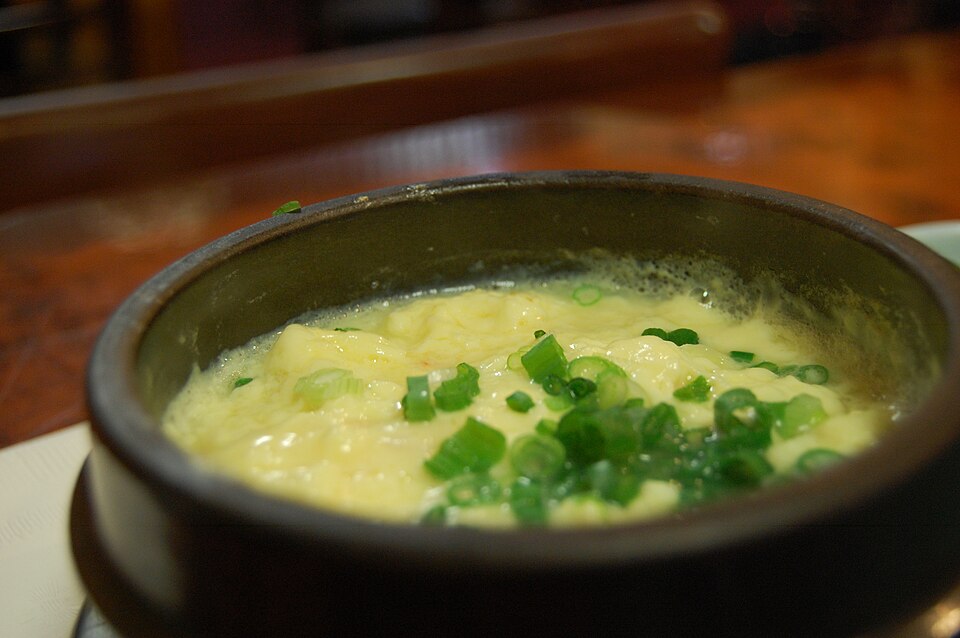
3. For the silkiest texture, strain the egg mixture through a fine-mesh sieve into another heatproof bowl or a small, oven-safe pot (like a ttukbaegi or ramekin). This removes any chalazae or bits of unbroken egg white.
4. Stir in half of the finely chopped scallions into the strained egg mixture.
5. **Steaming Method A (Pot-in-Pot):** Place a steaming rack or trivet in a large pot with about 1 inch (2.5 cm) of water. Bring the water to a boil, then reduce heat to a gentle simmer. Carefully place your bowl/pot with the egg mixture onto the rack.
**Steaming Method B (Direct Heat in Ttukbaegi):** If using a ttukbaegi, place the pot directly over very low heat on your stovetop.
6. Cover the pot (or the ttukbaegi itself) with a lid or a plate that fits snugly over the top.
7. Steam for 10-15 minutes (Pot-in-Pot) or cook on low heat for 8-12 minutes (Direct Heat), or until the Gyeran Jjim is set but still slightly wobbly in the center. Do not overcook, as it can become rubbery.
8. Carefully remove from the steamer or off the heat. Drizzle with sesame oil and garnish with the remaining fresh scallions and optional toasted sesame seeds before serving immediately. Enjoy with rice and your favorite Korean side dishes.
Feature: K-Food Spotlight – Gyeran Jjim (Steamed Egg)