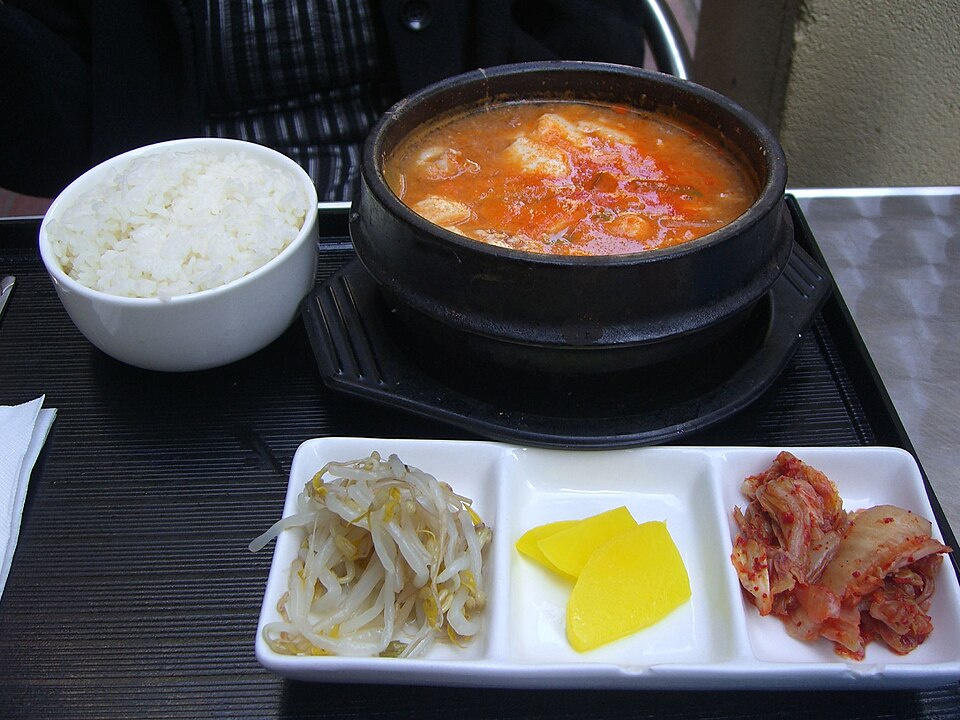
In the bustling landscape of Korean cuisine, where vibrant flavors and comforting textures reign supreme, few dishes capture the heart quite like Sundubu-jjigae. This iconic soft tofu stew is a culinary hug in a bowl, a testament to simplicity elevated to art, and a must-try for anyone exploring the rich tapestry of K-food.
Sundubu-jjigae’s charm lies in its namesake: *sundubu*, or “soft tofu.” Unlike firm varieties, sundubu is silken, unpressed, and incredibly delicate, almost custardy. Historically, it was a humble, hearty meal, often enjoyed by workers for its nourishing warmth and affordability. Today, it’s a beloved staple, gracing tables from home kitchens to dedicated sundubu restaurants across Korea and increasingly, the world. Served bubbling furiously in a traditional *tteokbaegi* (earthenware pot), it promises an immediate assault on the senses, beckoning you closer with its aromatic steam.
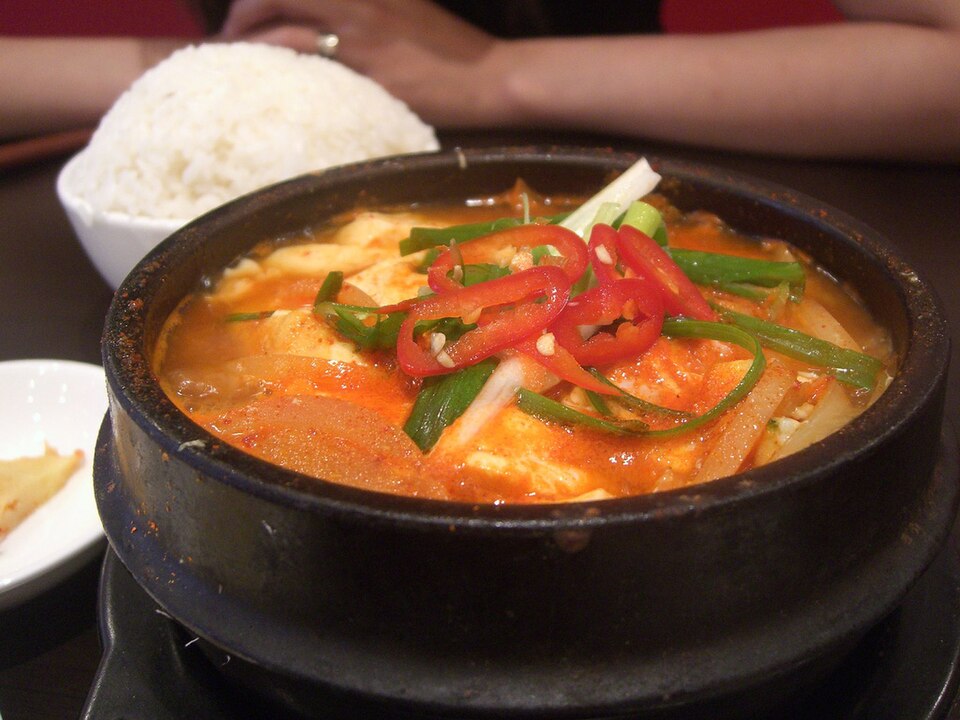
The flavor profile of Sundubu-jjigae is a symphony of contrasting notes: intensely savory and umami-rich, often with a delightful kick of spice. The broth, typically made from anchovy and kelp or simply water fortified with aromatics, forms a robust base. Korean chili flakes (*gochugaru*) infuse it with a vivid red hue and a controllable heat, while garlic, onion, and often a choice of protein (pork, beef, or seafood like shrimp or clams) add layers of depth. The star, sundubu, practically melts in your mouth, providing a creamy counterpoint to the spicy broth and a canvas for all the other flavors. The final touch, a gently poached egg, adds richness and a beautiful, runny yolk that mingles with the stew.
Beyond its incredible taste, Sundubu-jjigae offers a surprisingly nutritious meal. The soft tofu is an excellent source of plant-based protein, essential amino acids, and is naturally low in saturated fat. The vibrant array of vegetables commonly added, such as zucchini, mushrooms, and often a handful of kimchi, contributes vital vitamins, minerals, and dietary fiber. Kimchi, a fermented cabbage side dish often incorporated into the stew or served alongside, is renowned for its probiotic content, which can support gut health. The spices, particularly garlic, ginger, and gochugaru, are not just flavor enhancers; garlic and ginger are known for their immune-supporting compounds, while capsaicin in chili flakes has been studied for its potential to boost metabolism and offer anti-inflammatory properties. It’s a warming, wholesome dish that nourishes both body and soul.
Ready to recreate this Korean classic at home? Here’s a straightforward recipe to bring the magic of Sundubu-jjigae to your kitchen.
**Home-Style Sundubu-jjigae Recipe**
**Yields:** 1-2 servings
**Prep time:** 15 minutes
**Cook time:** 15-20 minutes
**Ingredients:**
* 1 tube/package (approx. 350-400g) silken/soft tofu (*sundubu*), gently drained
* 50-80g thinly sliced pork belly or shoulder (or shrimp/clams for a seafood version)
* ½ small onion, diced
* 3-4 cloves garlic, minced
* 1 green onion, white and green parts separated, sliced
* 1.5-2 tablespoons Korean chili flakes (*gochugaru*) – adjust to preferred spice level
* ½ tablespoon soy sauce (or Korean soup soy sauce/Guk-ganjang)
* 1 teaspoon sesame oil, plus extra for drizzling
* 2 cups water or anchovy-kelp broth
* ¼ small zucchini, thinly sliced
* Small handful enoki mushrooms (or 2-3 shiitake mushrooms, sliced)
* Salt to taste
* 1 large egg
* Cooked rice, for serving
**Instructions:**
1. **Prepare Aromatics & Protein:** Heat 1 teaspoon of sesame oil in a small pot or a *tteokbaegi* over medium heat. Add the diced onion, minced garlic, and the white parts of the sliced green onion. Sauté for 2-3 minutes until fragrant. Add the sliced pork (or seafood) and cook until it’s lightly browned and almost cooked through.
2. **Build the Spice Base:** Stir in the *gochugaru* and continue to cook for about 1 minute, stirring constantly to prevent the chili flakes from burning. This creates a flavorful chili oil base.
3. **Add Liquid & Seasoning:** Pour in the water or broth and the soy sauce. Bring the mixture to a boil.
4. **Incorporate Vegetables & Tofu:** Once boiling, add the sliced zucchini and mushrooms. Gently scoop the soft tofu into the pot using a spoon, breaking it into large, rustic chunks. Do not stir vigorously, as this can break up the delicate tofu too much. Reduce heat to medium-low and simmer for 5-7 minutes to allow the flavors to meld.
5. **Finish with Egg:** Taste and adjust seasoning with salt if needed. Make a small well in the center of the stew and crack in the egg. Continue to simmer for another 2-3 minutes, until the egg white is mostly set but the yolk remains runny (or cooked to your preference).
6. **Serve:** Garnish with the green parts of the sliced green onion and a final drizzle of sesame oil. Serve immediately, bubbling hot, alongside a bowl of freshly cooked rice.
Feature: K-Food Spotlight – Sundubu-jjigae