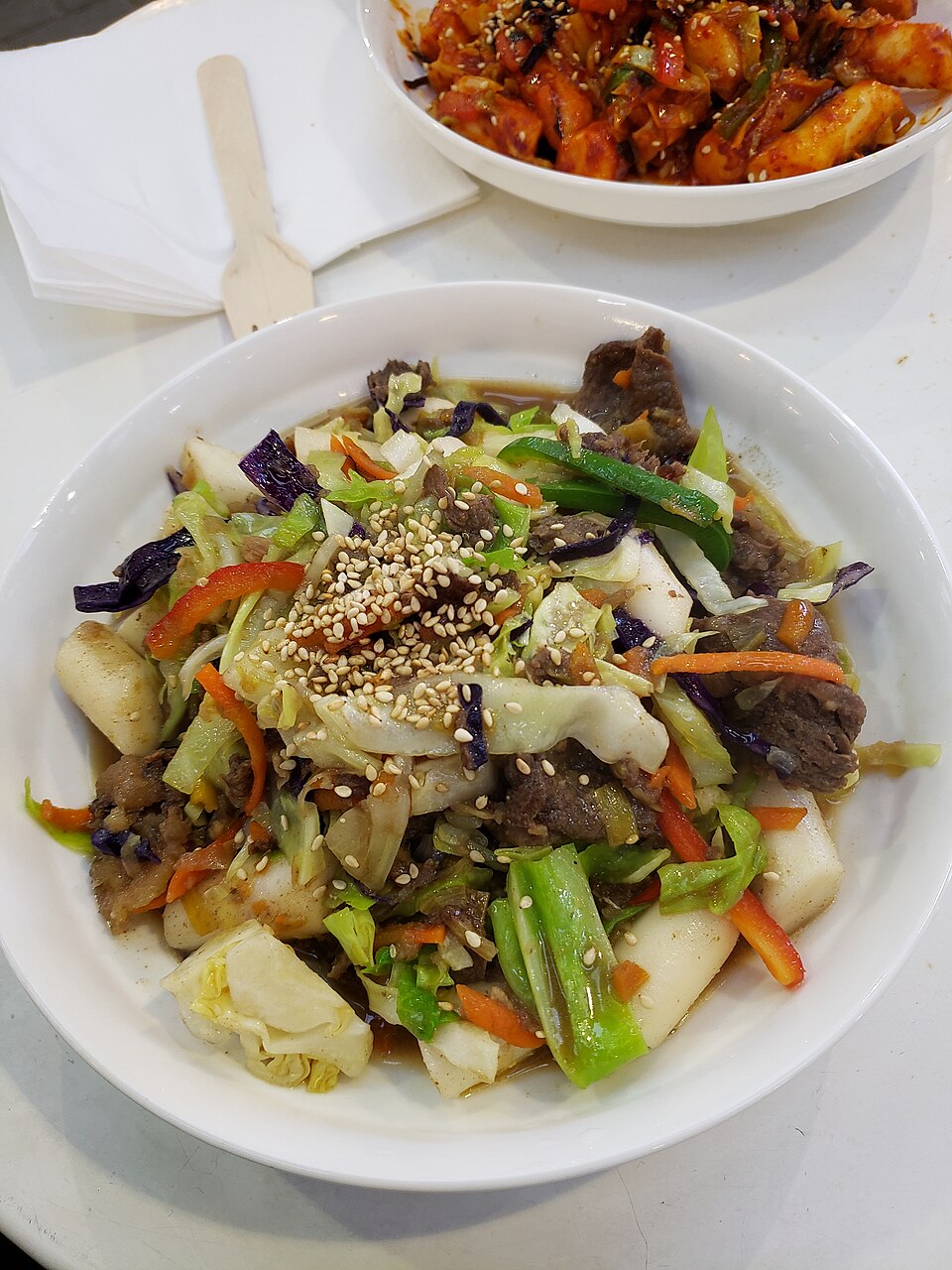
In the vibrant tapestry of Korean cuisine, few dishes ignite as much passion and comfort as Tteokbokki. More than just a simple snack, these chewy rice cakes bathed in a glorious crimson sauce are a cultural icon, a beloved street food staple, and a quintessential taste of Korea that has captured hearts globally.
Tteokbokki’s journey began centuries ago during the Joseon dynasty, albeit in a vastly different form. Known then as *gungjung tteokbokki*, it was a refined court dish made with white rice cakes, beef, vegetables, and seasoned with soy sauce, a far cry from its fiery modern incarnation. The transformation occurred post-Korean War, when the ingenuity of Korean cooks, combined with the increasing availability of *gochujang* (Korean chili paste), led to the birth of the spicy, red Tteokbokki we know today. It quickly became a popular street food, offering warmth and a satisfying kick to hungry Koreans, evolving into the national comfort food it is today, found everywhere from bustling markets to high-end restaurants.
What makes Tteokbokki so special? It’s an alchemy of textures and tastes. The star, *garaetteok* (cylindrical rice cakes), provides a uniquely satisfying chewiness. This texture is enveloped in a sauce that is a masterful balance of spicy, sweet, and savory. *Gochujang* lends its characteristic heat and fermented depth, while *gochugaru* (chili powder) amplifies the spice. A touch of sugar or corn syrup provides sweetness, creating an addictive harmony that keeps you reaching for more. Common additions like *eomuk* (fish cakes) soak up the rich sauce beautifully, while scallions and sometimes cabbage add freshness and a slight crunch. It’s a dish that warms you from the inside out, offering a deep sense of satisfaction that transcends mere hunger.
While often considered indulgent, Tteokbokki, especially when prepared thoughtfully at home, can offer surprising nutritional benefits. The foundation of the sauce, *gochujang*, is a fermented chili paste, which may offer probiotic benefits for gut health. Capsaicin from chili peppers, found in both *gochujang* and *gochugaru*, is associated with a temporary boost in metabolism and may possess anti-inflammatory properties. Incorporating fresh ingredients like scallions, and often added vegetables such as cabbage or onions, provides essential vitamins, minerals, and dietary fiber. Furthermore, the inclusion of fish cakes, and common additions like hard-boiled eggs or even lean protein like chicken or tofu, contributes to protein intake, making it a more balanced meal. Making Tteokbokki at home also allows you to control sugar and sodium levels, and significantly boost its nutritional profile by loading up on fresh vegetables.
Ready to recreate this Korean classic in your own kitchen? Here’s how:
**Homemade Tteokbokki Recipe**
**Ingredients:**
* 500g Korean Rice Cakes (Garaetteok), soaked in warm water for 20-30 mins if firm/frozen, then drained.
* 4 cups (960ml) water or anchovy-dashima broth
* 3 tbsp Gochujang (Korean Chili Paste)
* 1-2 tbsp Gochugaru (Korean Chili Powder, adjust to desired spice level)
* 1 tbsp Soy Sauce
* 2 tbsp Sugar or Corn Syrup
* 1 tbsp Minced Garlic
* 150g Fish Cakes (Eomuk), cut into bite-sized pieces or strips
* 3 stalks Green Onions/Scallions, cut into 2-inch lengths
* *Optional additions:* 1/2 cup sliced cabbage, 2 hard-boiled eggs, 1 pack instant ramen noodles (without seasoning packet), 1 tbsp sesame oil, sesame seeds for garnish.
**Cooking Steps:**
1. **Prepare Rice Cakes:** If your rice cakes are hard or frozen, soak them in warm water for 20-30 minutes until they soften slightly. Drain them thoroughly.
2. **Make the Sauce Base:** In a large pot or deep pan, combine the water (or broth) with gochujang, gochugaru, soy sauce, sugar/corn syrup, and minced garlic. Whisk thoroughly until all the sauce ingredients are fully dissolved and well combined.
3. **Bring to a Boil:** Place the pot over medium-high heat and bring the broth mixture to a rapid, rolling boil.
4. **Add Rice Cakes:** Once boiling, add the soaked and drained rice cakes to the pot. Reduce the heat to medium and let it simmer. Stir occasionally to prevent the rice cakes from sticking to the bottom. Cook for about 5-7 minutes, or until the rice cakes are tender and chewy.
5. **Incorporate Add-ins:** Stir in the cut fish cakes, green onions, and any optional additions you’re using, such as sliced cabbage or hard-boiled eggs. If you are adding instant ramen noodles, now is the time to put them in.
6. **Thicken the Sauce:** Continue to simmer for another 3-5 minutes. The sauce will naturally thicken as it cooks, becoming glossy and coating the rice cakes beautifully. If using ramen, ensure it’s cooked through.
7. **Serve:** Remove the pot from the heat. For an extra touch of aroma and flavor, drizzle with sesame oil and sprinkle with sesame seeds just before serving. Serve immediately while piping hot.
Feature: K-Food Spotlight – Tteokbokki